Feeding, growth or infections
Feeding difficulties, delayed growth and recurrent infections are possible.

The Health Advocate · In focus
Seven areas. One guided journey. Move through the numbers to discover where 22q11.2 deletion syndrome can have an effect.
Start at 01. Move through the numbers to see the possible effects, symptoms and care.
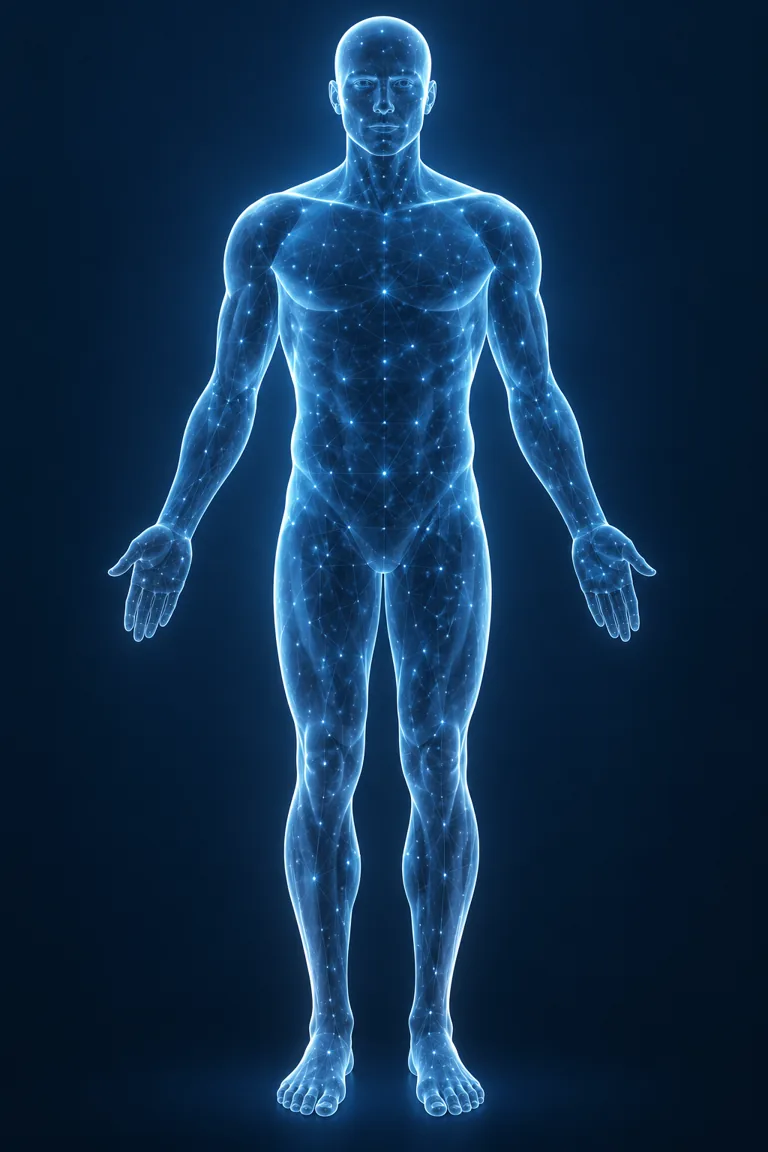
AI-generated conceptual illustration · Numbered locations are approximate, not a diagnostic scan.
1 of 7 · Learning & mental health
Explore at your own paceOr jump to any number on the body or below.
Learning and developmental differences can occur. ADHD and autism are more common in people with 22q11.2 deletion syndrome.
Speech or learning delays may lead to assessment. Needs vary between people.
Learning support and mental health care can be tailored to the person.
Read more: MedlinePlus Genetics ↗ · Care and treatment ↗
Differences in the roof of the mouth can affect speech. Feeding difficulties and hearing loss may also occur.
Speech may sound nasal; feeding or hearing concerns may need assessment.
Care may involve speech therapy, hearing assessment and a specialist palate team.
Read more: MedlinePlus Genetics ↗ · Care and treatment ↗
The parathyroid glands help regulate calcium. If they do not make enough hormone, blood calcium can become low.
Low calcium can cause complications, including seizures.
A clinician may monitor calcium and prescribe calcium or vitamin D when needed.
Read more: Mayo Clinic · Symptoms and causes ↗ · Care and treatment ↗
A small or absent thymus can affect the development of immune cells and increase vulnerability to infections.
Infections may be recurrent. The degree of immune difficulty varies.
An immunology team can assess immune function and advise on individual care.
Read more: Mayo Clinic · Symptoms and causes ↗ · Care and treatment ↗
Some people are born with structural differences in the heart or its major blood vessels.
A heart murmur or circulation problems may be among the signs.
A cardiology team assesses the individual; some heart conditions require surgery.
Read more: Mayo Clinic · Symptoms and causes ↗ · Care and treatment ↗
Kidney differences are among the possible features of 22q11.2 deletion syndrome.
An internal difference may be identified during medical assessment rather than through an obvious symptom.
Follow-up depends on the finding and the person’s health.
Read more: MedlinePlus Genetics ↗ · Care and treatment ↗
Feeding difficulties and gastrointestinal problems can occur. Some children also have difficulty growing.
Feeding or growth concerns can prompt assessment.
The care team can assess nutrition, swallowing and digestive concerns.
Read more: MedlinePlus Genetics ↗ · Care and treatment ↗
Every person is different. This map shows possible effects, not a prediction. It is selective, not exhaustive. Immune function and calcium regulation have effects throughout the body; their markers indicate glands involved, not the only places affected.
01 / Start with the genetics
22q11.2 deletion syndrome is a genetic condition in which a small segment of chromosome 22 is missing. It can affect several body systems.
The features vary widely, including between people in the same family. This map shows possible effects—not a list of what will happen to any one person.
Source: MedlinePlus Genetics ↗03 / Symptoms & signs
Features can be recognised at birth or emerge later, including in adulthood. Similar symptoms can have other causes: a body map cannot diagnose the condition.
Source: Mayo Clinic ↗Feeding difficulties, delayed growth and recurrent infections are possible.
Speech and developmental delays can lead to further assessment.
Some features are identified through clinical assessment or tests.
The combination and severity of features differ from person to person.
04 / Making a diagnosis
A genetic laboratory test can identify the deletion. A clinician considers the person’s history and findings and arranges appropriate assessment.
Source: Mayo Clinic · Diagnosis and treatment ↗05 / Care & treatment effects
The map explores possible features of the syndrome. These are not automatically side effects of a medicine.
There is no cure for the deletion itself, but individual problems can be treated or managed. Care may involve several specialties, therapies and learning support.
International 22q11.2 Foundation ↗There is no single side-effect list for 22q11.2. A medicine or procedure needs its own explanation of possible benefits, risks and monitoring, checked with the treating team.
Medical content is a sourced editorial draft, not individual advice. Independent clinical review is pending. Discuss health concerns and treatment questions with a qualified clinician.
06 / Life beyond the map
The family
A reported story about everyday life, relationships, strengths and the support that makes a difference.
Interview to be commissionedThe professor
An interview exploring why experiences differ, current research and questions still unanswered.
Interview to be commissionedThe charity
An interview about practical resources, community and the gaps families face.
Interview to be commissionedSources & editorial status
Sources checked 25 October 2026. No original interviews have been conducted for this preview. The diagram is a simplified editorial illustration and awaits clinical review before a finished feature is published.
← Explore In focus